

We may use tracking cookies to improve your experience on our website. If you wish, you can refuse the deposit of cookies.
See more
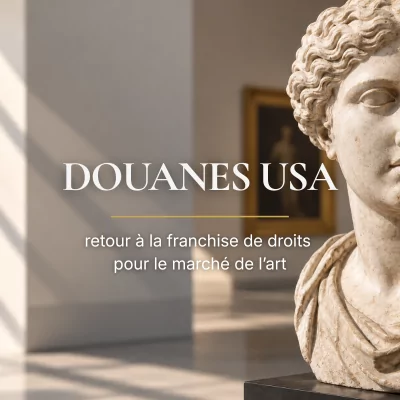
The trade agreement concluded on July 27, 2025 between the United States and the European Union introduces a uniform 15% customs duty on almost all European imports. While this measure is primarily economic in nature, it represents a direct threat to the art market, and particularly to antiques over one hundred years old (Chapter 9706 of the customs nomenclature).
While original works of art (chapters 9701 to 9705: paintings, prints, sculptures, and collectibles) are recognized as "informational materials" and remain exempt from customs duties, antiquities have never benefited from this protection. Their taxation creates a distortion of treatment that is unfair and detrimental to the entire sector.
Which Goods Are Affected?
Chapter 9706 covers a wide variety of cultural goods:
An entire segment of Europe’s movable and decorative heritage is therefore under threat.
Immediate Consequences
The application of a 15% tariff to Chapter 9706 would have major repercussions:
This is compounded by a specific constraint in the US market: there is no temporary importation procedure allowing duties to be suspended. The ATA Carnet is not recognized for goods intended for sale: dealers must pay duties upon entry, then request a refund if the goods remain unsold — a lengthy and uncertain process.
A Contradictory Legal Framework
Beyond the economic impact, this taxation runs counter to the Florence Agreement on the Importation of Educational, Scientific and Cultural Materials (1950).
Ratified by France in 1957 and by the United States in 1966, this agreement commits signatory states not to apply customs duties to cultural goods.
This commitment, which remains in force and legally binding, applies regardless of the United States’ membership of UNESCO. The US withdrawal from the organization in 2026 therefore does not call into question the validity of this agreement. Imposing customs duties on antiques would constitute a clear violation of this international commitment.
The SNA’s Mobilization
Faced with this unfair situation, the SNA began mobilizing as early as spring 2025.
Our objective is clear: to obtain an exemption for antiques and cultural goods from these unfair customs duties and to preserve the international free circulation of works of art.
The SNA remains fully committed to defending its members and protecting the central role of the French art market on the international stage. We will continue to keep our members and partners informed of developments in this matter.
The Syndicat des Négociants en Art brings together, represents, and supports art market professionals, both in France and internationally.